

Choose by reach and electrode exposure, not arc count. Single arc wins when you need to reach deep into a candle jar, a cigar’s foot, or a charcoal chimney. Dual arc earns its keep only when the housing lets you slide the target cleanly between both electrodes; otherwise, that second arc is decoration. Prioritize clearance, stem length, and grip over the number on the spec sheet.
TL;DR:
- Arc exposure and housing clearance are more important than arc count for effective ignition, especially with recessed or narrow targets.
- Dual-arc models often have design issues like obstructed access or recessed electrodes, reducing their practical reliability.
- Longer stems and open tips outperform multiple arcs when lighting candles, cigars, or deep charcoal beds.
- USB-C charging ports and clear battery indicators are better indicators of quality and usability than the number of arcs.
- Prioritize design features such as lid clearance and electrode visibility over branding or visual appeal for consistent performance.
Table of Contents
- Single Arc vs Dual Arc: Feature-By-Feature Comparison
- How Does Arc Count Affect Ignition Performance?
- What to Check in Photos and Specs Before Buying
- Which Arc Configuration Fits Your Use Case?
- Keeping Your Plasma Lighter Safe and Working Longer
- Why We Judge Lighters by Access, Not Arc Count
- Recommended Picks Based on Reach and Design
- Sources
- FAQ
Single Arc vs Dual Arc: Feature-By-Feature Comparison
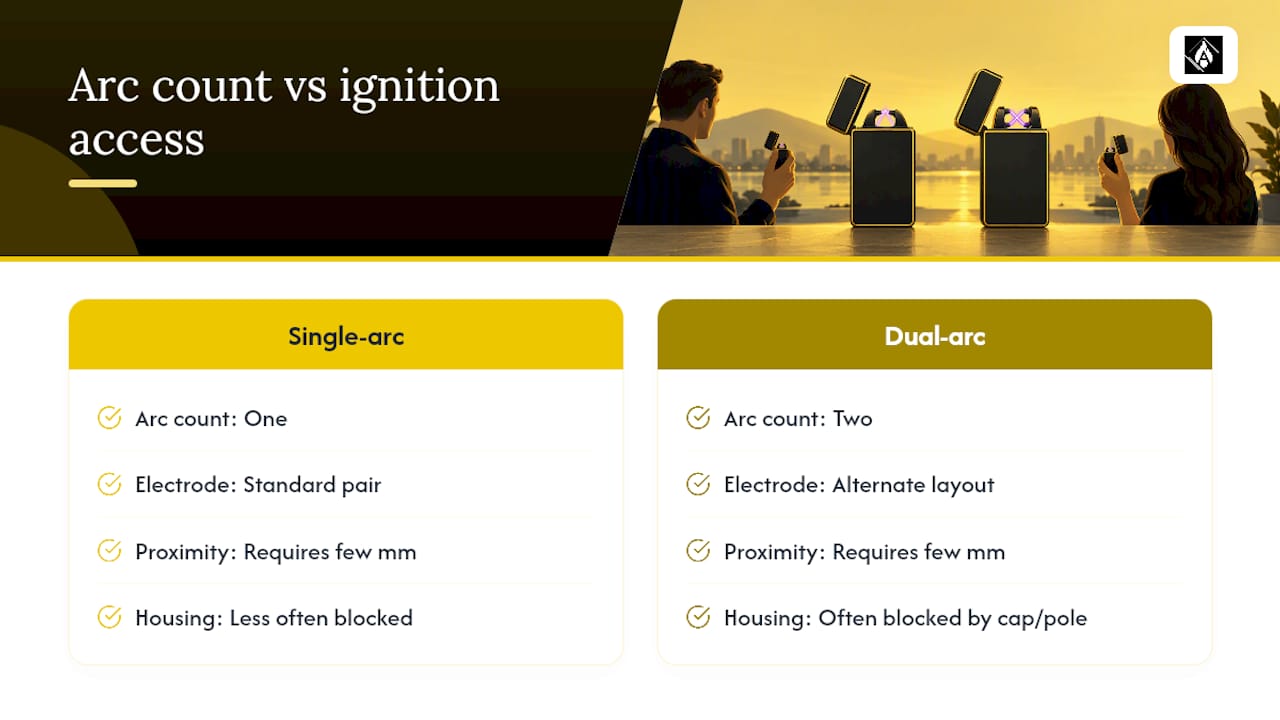
The instinct to assume two arcs beat one is understandable and, in most real-world cases, wrong. A plasma lighter’s job is to get an electrical arc close enough to fuel to ignite it, and that comes down to geometry, not electrode count.
- Best for: Single arc suits recessed candles, cigars, and camp stoves; dual arc suits flat-surface lighting like grill lines or paper.
- Reach/access: Single-arc designs typically use a narrower tip that slips into tight spaces; dual-arc housings are often wider and blockier.
- Electrode exposure: Single arc usually exposes one clean gap; dual arc can hide electrodes behind a raised rim or cap.
- Wind resistance: Both types resist wind well since plasma arcs do not rely on an open flame.
- Battery and charging: Comparable across both, dictated more by brand and battery capacity than arc count.
- Design appeal: Dual-arc models often look more dramatic in photos, which matters for collectors and gift buyers.
- Price/value: Dual-arc branding sometimes commands a premium that reach and usability do not always justify.
The misperception that more arcs mean stronger or more reliable ignition ignores how these lighters function. Two arcs matter when your use case genuinely needs a wider ignition zone, such as lighting a flat surface. For anything recessed, a second arc rarely changes the outcome.
How Does Arc Count Affect Ignition Performance?
A plasma arc is a small bolt of electricity jumping across a gap between two electrodes, hot enough to ignite material on contact. There’s no flame involved, which is why these lighters shrug off wind that would snuff out a butane flame in seconds. What determines whether that arc actually reaches your target is proximity, not how many arcs the lighter produces.
Popular Mechanics explains that dual arc is simply a different electrode arrangement. It is not a stronger flame substitute, and it does not multiply ignition power. The arc still needs the target within a few millimeters of the electrodes to work, which means a wide or awkwardly shaped item can be just as hard to light with two arcs as with one.
Consumer Reports’ hands-on testing backs this up directly. More arcs did not automatically translate into better performance during testing, and housing design frequently mattered more than electrode count. Some dual-arc models actually performed worse for recessed lighting because a protective cap or a vertical electrode pole sat between the arc and the wick, blocking access despite having twice the ignition points. A striking-looking lighter with beautiful engraving does you no good if the lid geometry keeps the flame gap an inch away from the candlewick it’s supposed to light.
What to Check in Photos and Specs Before Buying
Product photos tell you more than most spec sheets. Before you buy, run through this checklist using the images provided:
- Look for a top-down shot. This reveals whether the arc sits flush with the opening or recessed behind a rim.
- Check the side profile. A long-stem or extended-neck design reaches recessed wicks better than arc count ever will, according to Wirecutter’s testing notes on pocket versus long-stem models.
- Study the opened-lid view. Caps, sliding covers, and vertical electrode poles can block access even on dual-arc units.
- Confirm the charging port type. USB-C charges faster and is more durable long-term than older micro-USB connectors.
- Look for a battery indicator light. Multi-stage indicators (not just a single blinking light) tell you charge level more precisely.
Pro Tip: Zoom into the electrode area in every product photo you’re considering. If you can’t clearly see daylight between the arc tips and the lighter’s rim or housing, assume clearance will be tight in real use.
Which Arc Configuration Fits Your Use Case?
Matching arc type to how you’ll actually use the lighter beats guessing from marketing copy every time.
- Candles and votives: Electrode exposure and lid clearance matter far more than arc count. A single-arc model with an open, unobstructed tip will outlight a dual-arc lighter with a recessed cap almost every time.
- Cigars: Look for wide electrode spacing designed for cigar feet, or consider a windproof jet torch as an alternative. Dual arc helps here only when the spacing genuinely accommodates the cigar’s width.
- Grills and charcoal chimneys: Reach and stem length decide the outcome. Independent long-stem reviews found that pocket-style arc lighters, whether single or dual, struggled with deep charcoal beds where a longer reach performed noticeably better.
- Collectors: Finish, materials, and warranty terms deserve more attention than arc count. A vintage-styled piece that displays beautifully on a shelf still needs to function reliably when you actually use it.
Keeping Your Plasma Lighter Safe and Working Longer
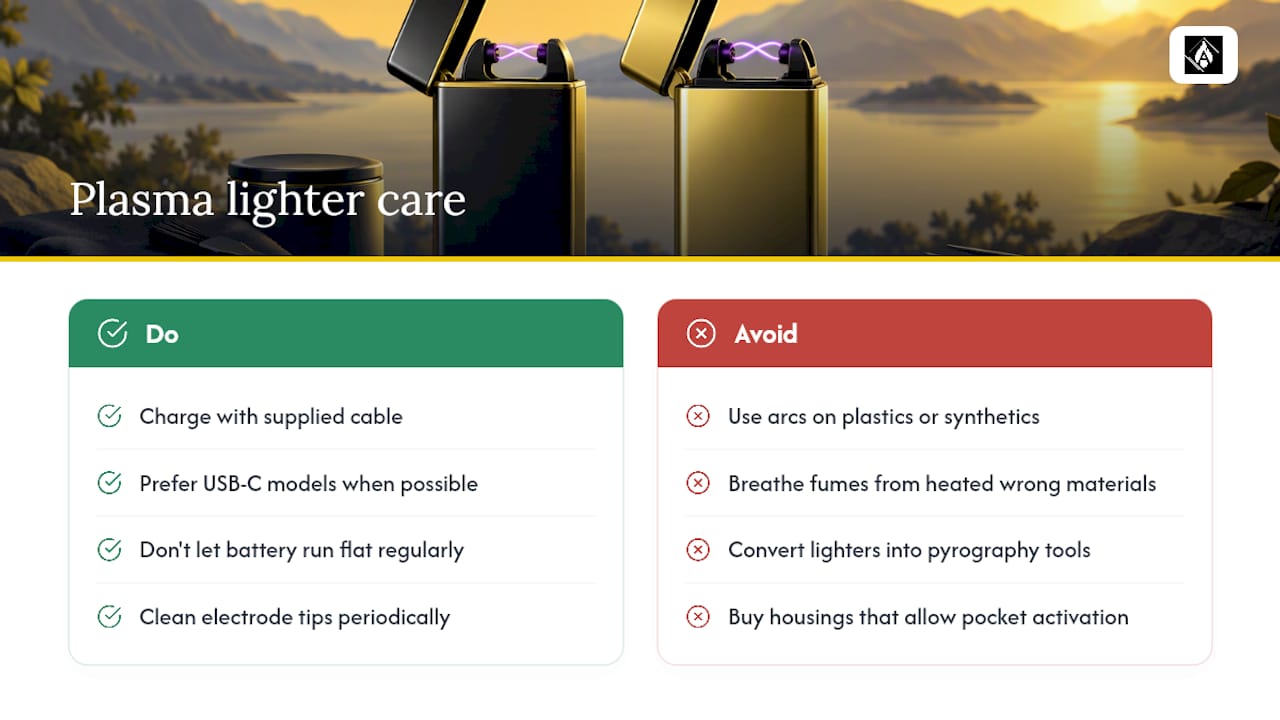
Charge with the cable your lighter shipped with, and avoid letting the battery run completely flat on a regular basis. USB-C models tend to charge faster and hold up better over years of use than older micro-USB designs. Most quality units last hundreds of charge cycles before capacity noticeably drops, though exact battery life varies by model.
Clean electrode tips periodically to remove carbon buildup, which can weaken the arc over time. Never use a plasma arc on plastics or synthetic materials not intended for ignition. Maker projects converting arc lighters into pyrography pens demonstrate how hot these arcs run, and heating the wrong material releases fumes you don’t want to breathe.
Favor lighters with automatic shutoff, a clearly marked on/off switch, and a housing that doesn’t allow accidental activation in a pocket. For a purchase in this price range, confirm what warranty coverage and replacement parts the seller offers before checkout.
Why We Judge Lighters by Access, Not Arc Count
Chasing a higher arc count is the collectible-lighter equivalent of buying a car for its horsepower number without checking whether it fits in your garage. At Allurecart, we look at electrode exposure, housing clearance, and how reliably the spark ignites before we ever consider whether a design has one arc or two. A beautifully engraved dual-arc piece that can’t reach a votive candle isn’t a functional upgrade. It’s a display piece pretending to be a tool.
Design and function don’t have to trade off against each other. A Lightsaber Lighter can carry serious novelty appeal and still light reliably if the electrode layout is sound. That balance, striking design paired with dependable ignition, is what we look for in every piece we add to the catalog.
— Allurecart
Recommended Picks Based on Reach and Design
Once you know what to look for, matching a model to your needs gets a lot easier. Here’s how a few standout designs in the Allurecart catalog line up against the criteria covered above:
- RETRO LIGHTER — a collector’s display piece with clean electrode exposure, making it a solid pick for votive and candle lighting once opened.
- CAMEL VINTAGE LIGHTER — built for shelf appeal and daily carry alike, with a housing that keeps the arc accessible.
- ACE OF SPADES LIGHTER — a bold novelty design for collectors who want a conversation piece that still lights reliably.
- BULLET SHELL LIGHTER — a durable metal-shell build suited to buyers who prioritize materials and finish.
- JET LIGHTER — a torch-style option for anyone who wants dependable reach without depending on arc count at all.
- GLOW LIGHTER and LUMINO LIGHTER — statement pieces for collectors who want a lighter that stands out visually first, functions reliably second.
- CLASSIC GOLD LIGHTER — a refined, minimalist option for buyers who want understated elegance over novelty theming.
Every model ships with reliable spark ignition and Allurecart’s free worldwide shipping on orders over $70, so building out a small collection doesn’t mean paying shipping on each individual piece. Browse the full collection to compare housings and electrode layouts side by side, or check the accessories line for cleaning tools and charging cables that keep your lighter running for years.
Sources
- 4 Best Plasma Lighters, Tested by Our Experts - Consumer Reports
- How Plasma Lighters Work | Plasma lighters to buy - Popular Mechanics
- I Was Surprised by How Much I Liked These Electric Lighters | Reviews by Wirecutter
- Suprus Electric Arc Lighter Review: Windproof Fire-Starting Fun
FAQ
Is Dual Arc Better Than Single Arc for Candles?
Not usually. Single arc tends to work better for candles because the exposed electrode reaches recessed wicks more easily, and Consumer Reports found that housing clearance mattered more than arc count for this exact task.
Does More Arcs Mean a Stronger Flame?
No, plasma lighters don’t produce a flame at all. Popular Mechanics notes that dual arc is simply a different electrode arrangement, not a more powerful ignition source.
What Should I Check Before Buying a Dual-Arc Lighter?
Look closely at product photos for lids, caps, or vertical electrode poles that could block access to recessed targets. Confirm the charging port is USB-C and check for a clear battery indicator before checkout.
Are Single-Arc Lighters Good for Cigars?
Yes, if the electrode spacing matches your cigar’s width; otherwise a torch-style option or a dual-arc model with wider spacing may work better. Reach and stem length matter more than arc count for this use.
Which Allurecart Lighter Is Best for Collectors?
Models like the RETRO LIGHTER and CAMEL VINTAGE LIGHTER pair strong collector appeal with clean electrode exposure. Current pricing for these and other pieces is available on the Allurecart site.